
Box construction
Name the preferred opening style and ask the supplier to state board, wrap and assembly assumptions. Compare fixed rigid structures with magnetic formats only against the same product brief.
Buyer checklist · Packaging specification · Australian delivery brief
Prepare one clear specification before comparing custom box suppliers. This checklist separates product fit, packaging construction, artwork, sample approval, export cartons and freight scope so each quotation answers the same brief.
Use this page as a planning tool. A final structure, price and delivery option still depend on the confirmed project specification.
1. Product and box measurements
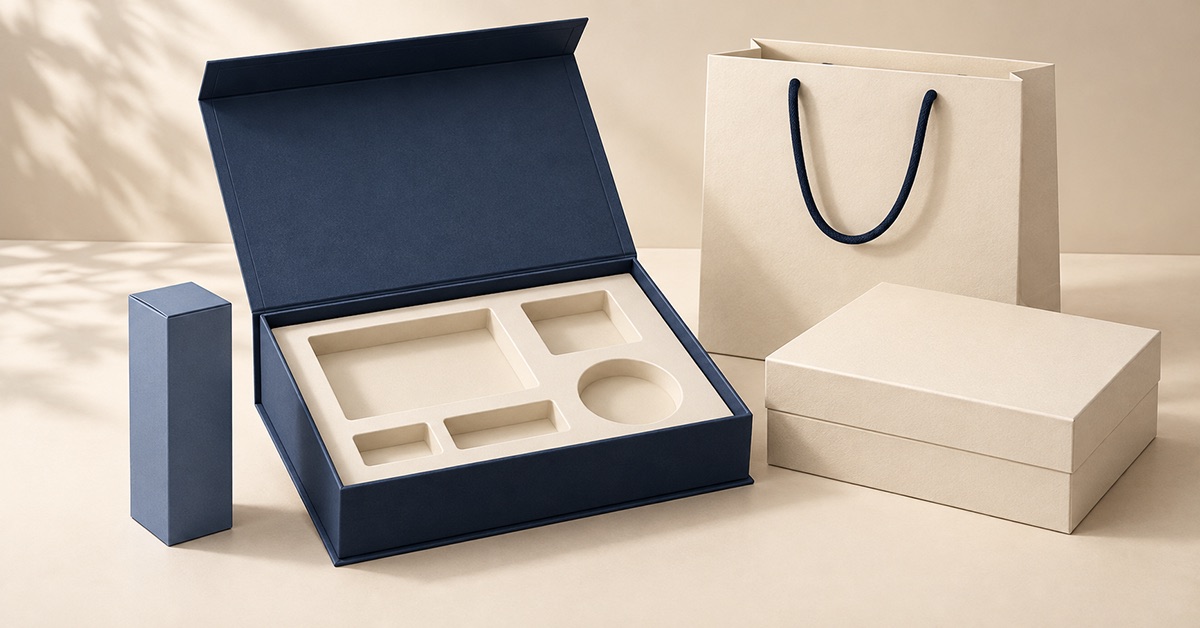
The product dimensions help develop the fit. The usable internal space shows what the packaging can hold. The external box size affects presentation, export-carton packing and shipment volume. Ask for all three to be clearly labelled.
Where the product shape or fit is critical, provide a physical product or an agreed reference rather than relying on a single photograph.
| Record | What to confirm | Why it matters |
|---|---|---|
| Product | Maximum L × W × H, weight, orientation and contact points | Defines the starting fit and support requirements |
| Usable internal space | Clear space after board, lining and insert are considered | Confirms the product can be placed and removed as intended |
| Insert openings | Opening dimensions, depth, spacing and finger clearance | Controls support, reveal and removal |
| Finished external size | Closed box L × W × H and opening orientation | Affects shelf presence, bags, sleeves and freight volume |
| Reference method | Drawing version, units and who approved the dimensions | Prevents different files or measurement bases being compared |
2. Structure, quantity and finish
A reference image can show direction, but it does not define the hidden board, insert, wrap, print, packing or delivery requirements.
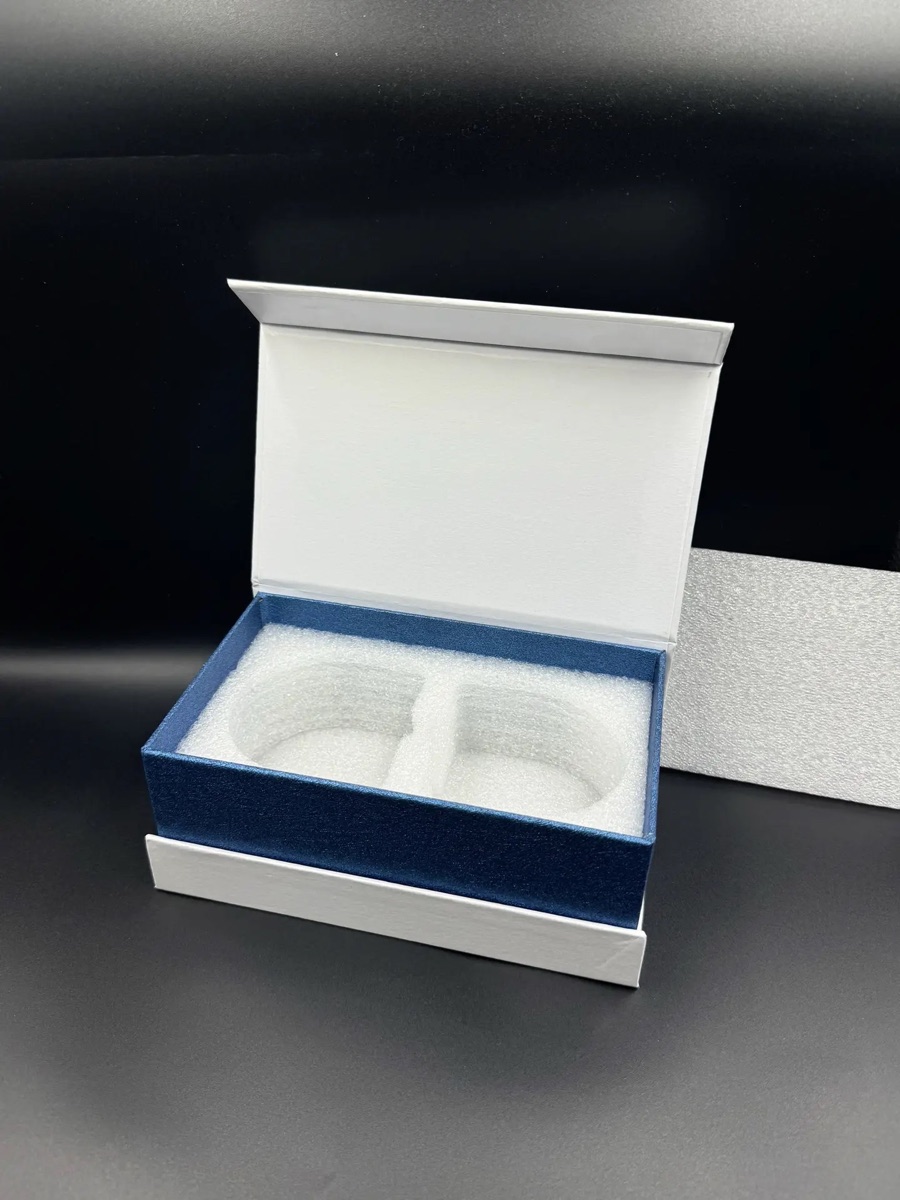
Name the preferred opening style and ask the supplier to state board, wrap and assembly assumptions. Compare fixed rigid structures with magnetic formats only against the same product brief.
List units for every box size, product layout and artwork design. Do not combine versions into one total if they require different printing, setup or packing.
Record the proposed insert material, number of openings, product orientation and removal needs. Use the insert sample fit approval checklist for retention, removal and closure checks. List paper bags, tissue, sleeves, ribbons or cards as separate coordinated components.
Identify artwork areas, colour references, logo process and finish locations. Ask alternatives to be shown separately when the final material or process has not been selected.
4. Export cartons and Australian delivery
Fixed and flat-pack structures can use very different shipment volumes. A useful freight comparison therefore follows the confirmed box and packing method, not an early concept image.
Provide the Australian suburb or postcode and the target arrival objective. Ask suppliers to state production and international transit timing separately and to identify what is included or excluded from the freight scope. For a complete carton, route and receiver comparison, continue with the custom packaging freight quote checklist for Australia.
| Delivery input | Confirm in the quote |
|---|---|
| Export packing | Units per carton, carton L × W × H, gross weight and any inner protection |
| Shipping basis | Origin, proposed method and the point to which freight is quoted |
| Destination | Australian suburb or postcode and whether a commercial receiving address is available |
| Cost scope | Freight inclusions, exclusions and responsibility for duties, taxes or local charges |
| Timing | Estimated production and transit stages shown separately, with assumptions stated |
A brief you can send
Attach photos, drawings and artwork using clear version names. Mark anything unknown as a recommendation request rather than guessing.
Product name, photos, maximum dimensions, weight, quantity per box and intended arrangement.
Preferred box style, internal and external size requirements, insert, accessories, artwork and finishes.
Quantity by size and design, artwork status, required sample checks and who will approve revisions.
Postcode, receiving address type, target arrival objective and the freight scope you need compared.
Quoting a coordinated box, insert and carry package? Use the multi-component gift box handover → to keep every component on the same configuration and approval version.
A useful quote begins with one specification that every supplier can answer.
Ready to discuss the project?
The Australian packaging hub explains structure options and provides the existing enquiry form. You can also send photos, drawings or artwork through the listed WhatsApp and email contacts.
Open the packaging quotation formQuotation checklist FAQs
Yes. Send the product dimensions, proposed box style, quantities, insert requirements, delivery postcode and any brand or finish references. Final artwork and colour references can be confirmed before sampling and production approval.
Ask suppliers to identify both the usable internal space and the finished external size. The internal space controls product fit, while the external size affects presentation, export-carton packing and freight volume.
Check the actual product fit, removal clearance, lid or closure alignment, insert support, artwork placement, colour reference and specified finishes. Record agreed changes before bulk production approval.
Use the same box specification, quantity and postcode, then compare units per carton, carton dimensions, gross weight, shipping method, stated inclusions and the party responsible for duties or local charges. Production and transit timing should be shown separately.
Different sizes or artwork versions may require separate setup, materials, printing or packing. Listing the quantity for each version gives suppliers a clearer basis for quoting the same project.